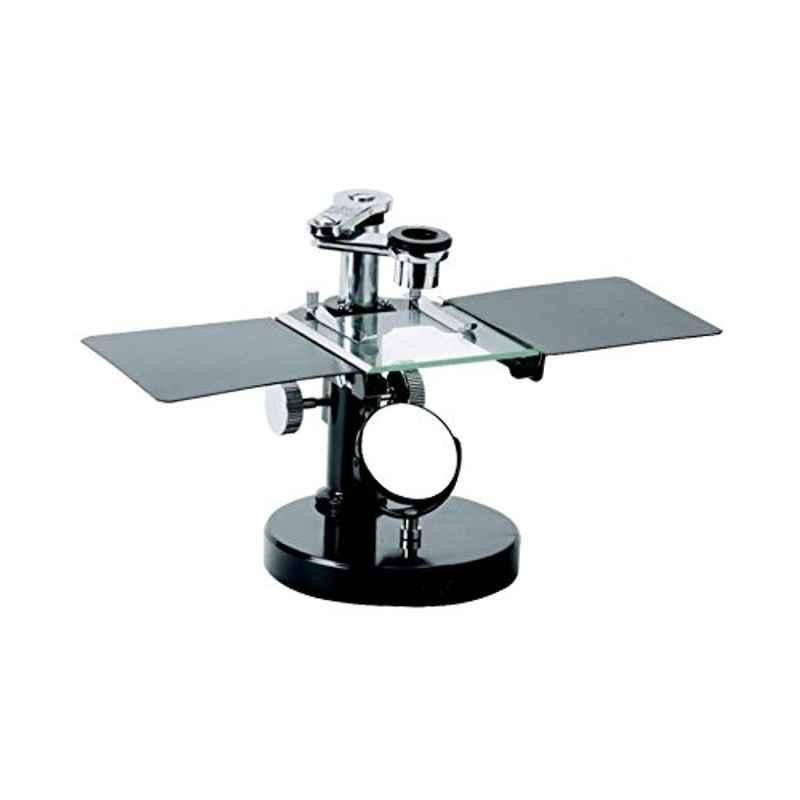
About compound medical microscope ( brass )
Technical Specifications
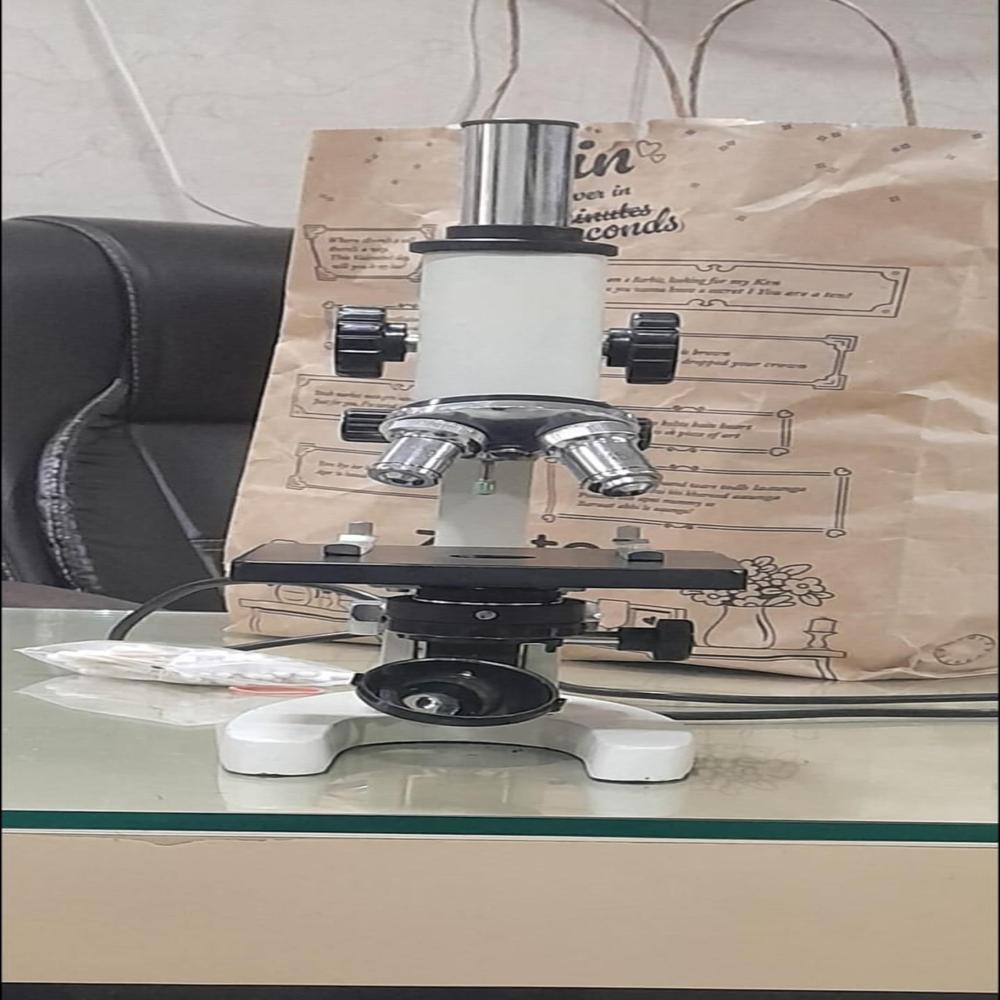
- Body: Heavy, pressure die-cast monocular body with a stable horseshoe base, inclinable up to 90.
- Head / Viewing Tube: Monocular vertical or inclined tube (standard mechanical tube length around 160 mm).
- Eyepieces (Ocular): Huygenian or Wide-Field 10x and 15x (or up to 25x in advanced configurations).
- Objective Lenses: Triple revolving nosepiece carrying Achromatic 10x and 40x/45x (and optional 4x low power or 100x oil immersion).
- Stage: Fixed square stage (typically 110x110 mm or 120x120 mm) equipped with stage/phosphorus slide clips.
- Focusing System: Separate coarse adjustment (via rack-and-pinion) and fine motion adjustment (via lever or screw mechanism) with a safety slide stopper.
- Condenser & Diaphragm: Abbe condenser (N.A. 1.25) with an iris diaphragm to control lighting intensity and contrast.
- Illumination: Plan/concave reflecting mirror for natural daylight or an interchangeable clip-on lamp
Vintage Design, Modern ReliabilityCombining classic vintage aesthetics with contemporary performance, this brass compound microscope stands out in both appearance and operation. Its robust horseshoe base dampens vibrations, while the precision brass construction guarantees stability and alignment, making it the preferred choice for delicate clinical and educational observations.
Precision Optics and Smooth FocusingEquipped with achromatic objectives (10X, 40X, 60X) and a standard Huygenian 10X eyepiece, this microscope delivers sharp, clear images at magnifications up to 600X. The brass rack-and-pinion focusing system allows both coarse and fine adjustments, facilitating effortless and accurate specimen examination.
User-Friendly and PortableDesigned with simplicity and convenience in mind, its mechanical assembly allows easy operation and straightforward maintenance. The lightweight, compact form with a supportive handle makes it readily portable, suitable for use in laboratories, field settings, and classrooms.
FAQ's of compound medical microscope ( brass ):
Q: How is the compound medical microscope (brass) constructed for durability?
A: The microscope body, drawtube, nosepiece, and focusing mechanisms are made entirely from brass, providing enhanced durability, corrosion resistance, and long-term precision. Its polished and lacquered finish further protects against wear and tarnish.
Q: What benefits does a brass construction offer compared to standard microscopes?
A: Brass construction ensures higher mechanical stability and less flexing during adjustments. This means more reliable image quality and consistent alignment of optical elements, especially useful in educational and laboratory environments where longevity is important.
Q: Where is this microscope best utilized and who should use it?
A: This microscope is ideal for use in schools, colleges, clinical and field laboratories, and demonstration settings. It is suitable for students, teachers, lab technicians, and anyone needing a robust and portable optical microscope.
Q: How is focusing achieved on this microscope?
A: Focusing is accomplished using both coarse and fine focus knobs connected to a brass rack-and-pinion system. This allows rapid rough adjustments as well as fine, microscopic tuning for precise image clarity.
Q: What is the process of illuminating specimens with this microscope?
A: Specimens are illuminated using a plano-concave mirror that reflects either daylight or an external lamp toward the slide. This manual, mirror-based illumination provides flexibility, especially when working in field or classroom environments without electricity.
Q: What spares and maintenance options are available?
A: Spare objectives, eyepieces, mirrors, and stage clips are readily available. Maintenance is simple due to the mechanical assembly, and the brass body can be easily cleaned and serviced for long-term use.
Q: When should this microscope be selected over digital models?
A: Choose this model when you need a robust, non-digital solution that offers high optical performance, vintage appeal, and reliable mechanical function without dependence on electronic components or power sources.






 Send Inquiry


 Send Inquiry
