Binocular Research Microscope About
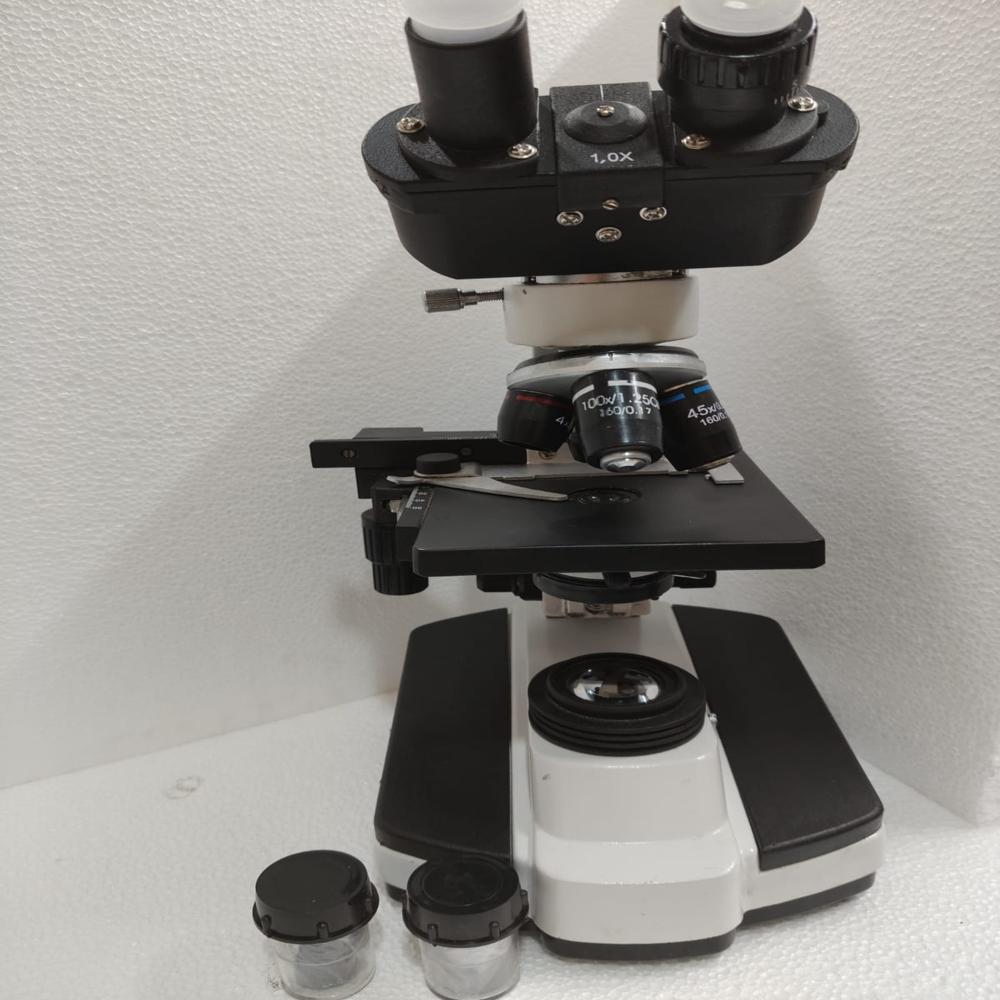
A binocular research microscope is an advanced optical instrument utilized in clinical, educational, and biological laboratories for the detailed observation of cells, tissues, and microorganisms. It features two adjustable eyepieces for ergonomic viewing and delivers high-resolution magnification
Technical Specifications
- Observation Head: Binocular head inclined at 45 and rotatable through 360
- Eyepieces: Paired Wide Field WF 10X and secondary pairs such as 5X, 6X, or 15X (anti-fungal coating common on standard models)
- Objective Lenses: Achromatic 4X (0.10 NA), 10X (0.25 NA), 40X SL (0.65 NA), and 100X SL Oil Immersion (1.25 NA)
- Built-in graduated mechanical stage (approx. 135x120 mm or 120x140 mm) with low coaxial drive controls for smooth X-Y movement (range around 50x75 mm)
Rugged Construction and Precision EngineeringConstructed from durable metal and finished with enamel, the microscope ensures reliability in demanding environments. The mechanical stage, vernier scale, and quadruple nosepiece enable accurate, reproducible sample positioning. Research professionals benefit from smooth, coaxial coarse and fine focus adjustments, granting precision at every magnification level.
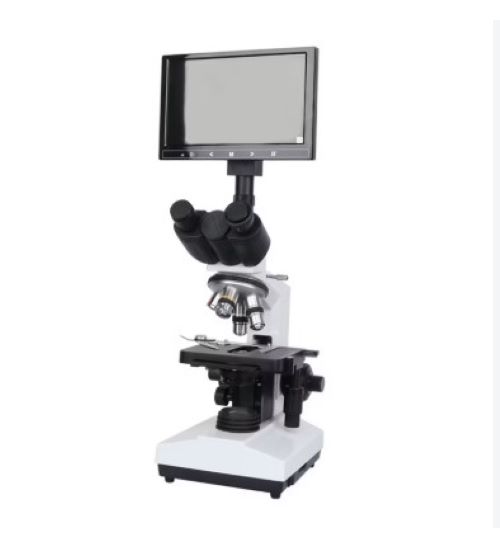
Adaptability for Advanced Imaging NeedsThis microscope accommodates digital imaging via optional camera attachment, making it versatile for both traditional and advanced research workflows. Whether you require basic visual analysis or wish to integrate imaging solutions, the modular design supports current and evolving laboratory requirements.
Practical Accessories and Ergonomic FeaturesA comprehensive set of accessories-including sample slides, immersion oil, and a dust cover-ensures immediate usability. The inclined binocular head, adjustable interpupillary distance, and rotatable view enhance comfort, allowing extended studies without strain. Mechanical XY stage controls further streamline the user experience for educators and researchers alike.
FAQ's of Binocular Research Microscope:
Q: How does the graduated mechanical stage with a vernier scale benefit laboratory users?
A: The graduated mechanical stage with a vernier scale allows precise measurement and repeatable movement of slides, making it easier for users to locate and return to specific sample areas during analysis and documentation.
Q: What is the process for attaching a digital camera to this microscope?
A: This microscope is designed to be adaptable for digital camera attachment via appropriate adapters. Simply mount the camera to the phototube or eyepiece tube as specified, following the camera manufacturer's instructions. This enables capturing and sharing detailed sample images.
Q: When should the oil immersion objective be used, and what is its benefit?
A: The 100x oil immersion objective is ideal for observing extremely fine details at high magnification, commonly in microbiology or cell biology. Using immersion oil reduces light refraction, which enhances resolution and clarity far beyond what dry objectives provide.
Q: Where can the microscope be utilized effectively?
A: This microscope is well-suited for research, laboratory, and educational settings where high-precision observation and analysis of biological, medical, or material samples are required.
Q: What accessories are included with the purchase of this microscope?
A: Included accessories are sample slides, a dust cover to protect the instrument when not in use, and a bottle of immersion oil for use with the 100x oil immersion objective lens. Spare parts like eyepieces or bulbs (for illuminated models) are also available.
Q: How can users adjust the interpupillary distance and diopter for comfortable viewing?
A: Users can adjust the interpupillary distance between 55mm and 75mm to match the gap between their eyes. The diopter adjustment on the left eyetube enables fine-tuning focus differences between the user's eyes for comfortable, strain-free viewing.
Q: What are the primary usage and benefit of choosing a binocular research microscope over monocular models?
A: A binocular microscope provides both-eyes viewing, reducing eye fatigue during prolonged use. It also offers adjustable interpupillary distances and ergonomic inclined viewing, allowing users to work efficiently and comfortably for extended analysis sessions.






 Send Inquiry


 Send Inquiry