About Priestley Smith perimeter
Technical Specifications
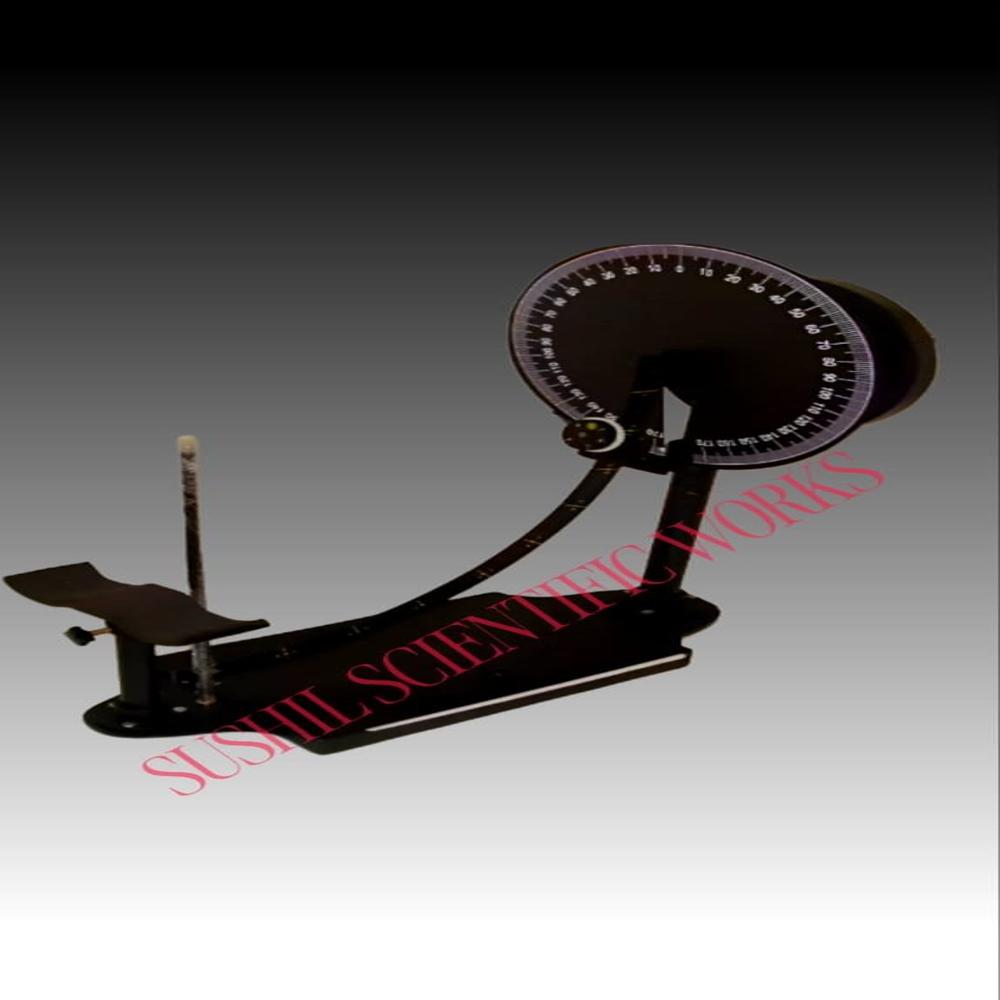
- Arc Radius: 330 mm semicircular metallic arc.
- Arc Rotation: Rotates 360 in any direction and can be fixed at any position using a tightening screw.
- Graduation Scale: Arc is calibrated and graduated from 0 to 90 (or 0 to 180 total).
- Test Object / Stimulus: Movable white spot target with a 10 mm diameter mounted on a circular disc.
- Patient Support: Features an adjustable manual chin rest for precise alignment and a detachable leveling bar.
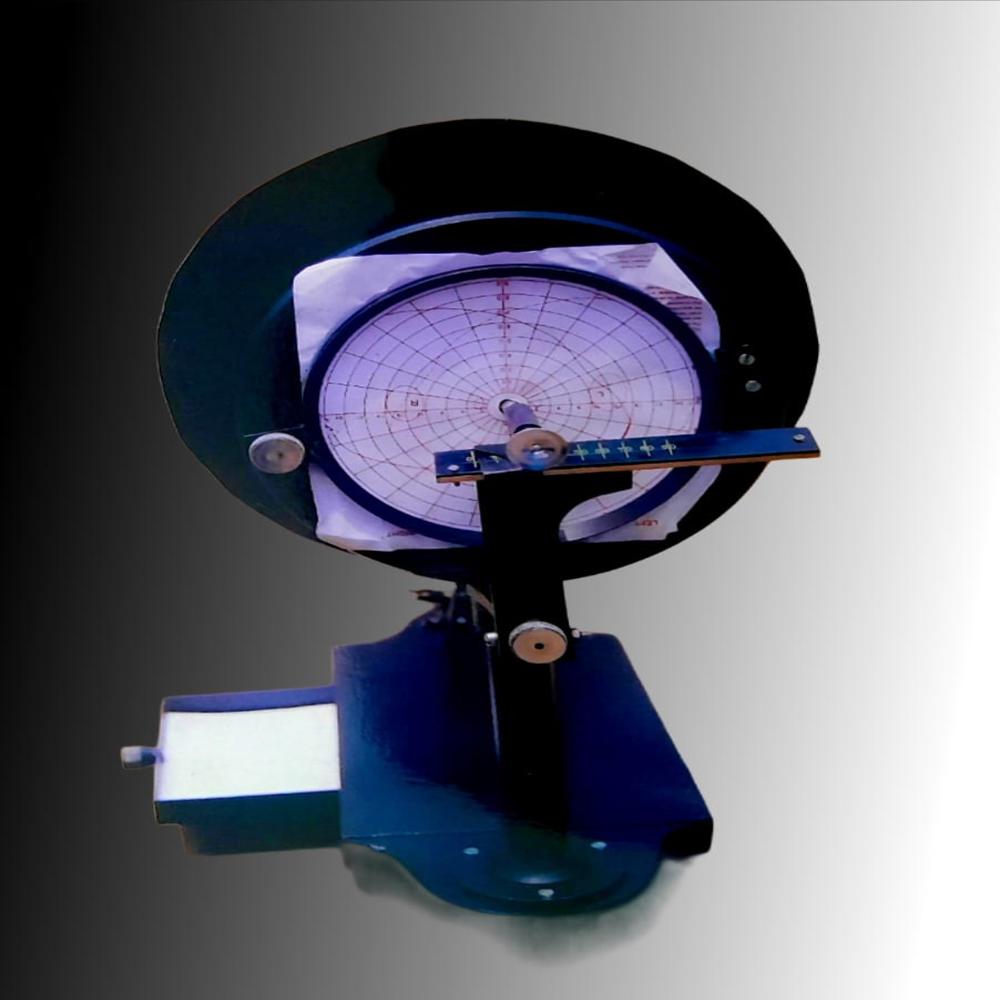
- Recording Mechanism: Includes a circular black disc with a chart frame, a graduated scale, and a movable pin-punch pointer to mark readings directly onto the perimeter chart paper (supplied with standard 100-chart packs).
- Construction: Heavy-duty metal / aluminum casting structure mounted on a stable vertical stand
-
Key Clinical Applications
- Mapping peripheral visual field boundaries.
- Detecting scotomas (blind spots).
- Assisting in the clinical evaluation of glaucoma, neurological damage, and retinal disorders
Accurate Visual Field AssessmentThe Priestley Smith perimeter enables thorough ophthalmologic visual field evaluation, measuring up to 90 degrees temporally. Its engraved arc scale and clinically precise graduations help practitioners detect and monitor peripheral vision deficits with high precision. The adjustable chin rest and forehead support ensure reliable patient positioning during testing, enhancing both comfort and accuracy in measurement.
Manual Operation Without Power ConstraintsEngineered for manual, non-electric operation, this perimeter requires no external power supply-ideal for clinics prioritizing reliability and simplicity. The mechanical control allows seamless adjustment and consistent charting of results, offering significant ease of use in diverse clinical settings, even during power outages or limited access environments. Its powder-coated steel construction ensures long-term durability.
FAQ's of Priestley Smith perimeter:
Q: How is visual field testing performed with the Priestley Smith perimeter?
A: To perform visual field testing, the patient rests their chin on the adjustable chin rest and their forehead against the support. The operator manually moves the fixation target and records responses on the engraved and painted degree scale, using the included perimetry charts for accurate documentation.
Q: What are the main benefits of using a manual perimeter like this model?
A: Manual perimeters such as the Priestley Smith perimeter offer precise and reliable visual field assessment without reliance on electricity. Their robust construction and straightforward controls make them ideal for both routine and mobile ophthalmology practices, ensuring dependable performance in varied clinical scenarios.
Q: When should the Priestley Smith perimeter be used in ophthalmology?
A: This device is best used during routine eye exams, monitoring glaucoma progression, and assessing any other conditions affecting peripheral vision. Its clinically precise scale and adjustable supports make it suitable for regular patient screening and follow-up evaluative needs.
Q: Where can the Priestley Smith perimeter be installed for optimal use?
A: Thanks to its tabletop mounting type and manageable weight of approximately 6 kg, this perimeter is well-suited for examiner desks and clinical diagnostic rooms. Its compact size allows easy positioning in clinics, hospitals, and vision centers.
Q: What process does the operator follow during testing?
A: The operator positions the patient, selects the appropriate perimetry chart, and manually guides the target along the semi-circular arc. Patient responses are plotted, and the engraved graduations enable precise measurement of the visual field, which is then recorded for clinical evaluation.
Q: What accessories come with the Priestley Smith perimeter?
A: The device includes spare perimetry charts, ensuring uninterrupted screening for multiple patients and efficient workflow in busy clinical environments.





 Send Inquiry


 Send Inquiry
