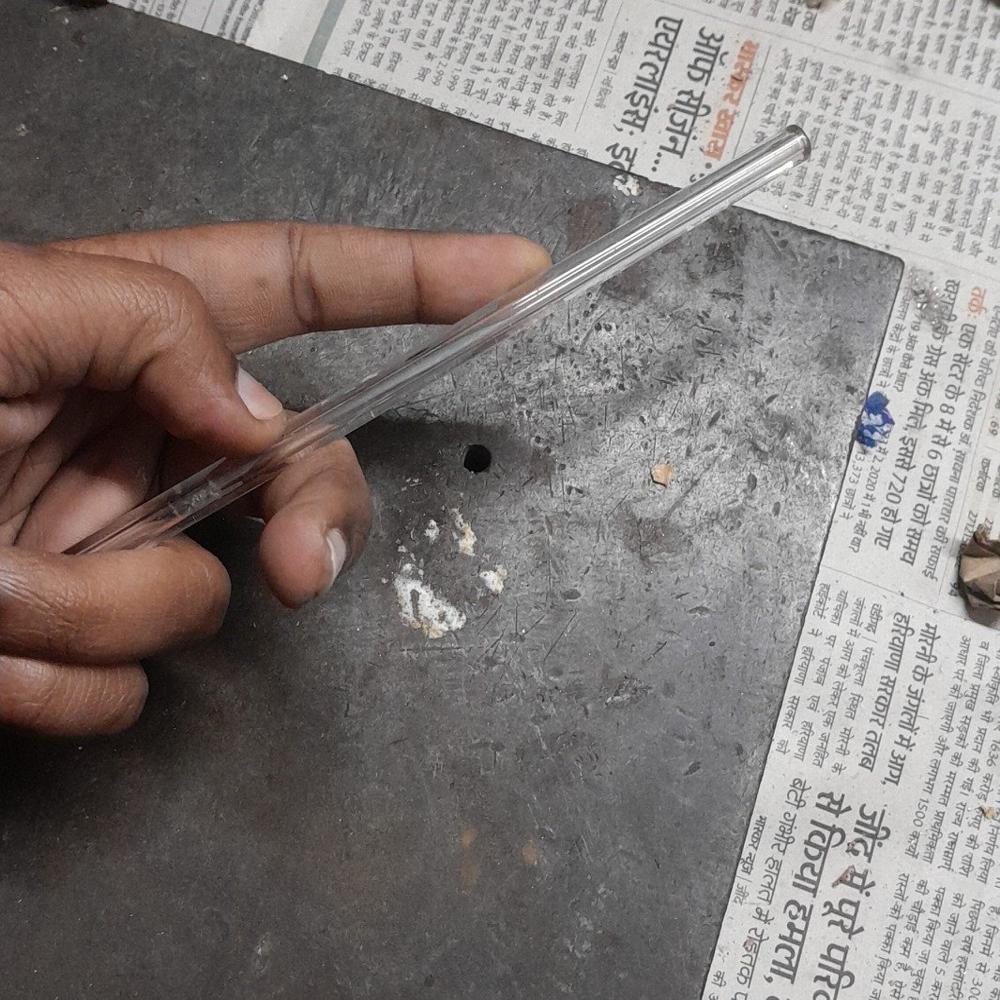
About Glass Stirring Rod
Core Uses in the Laboratory
- Chemical Mixing: Used to mix chemicals and liquids gently to accelerate dissolution or blending without causing spillages.
- Decanting Liquids: Acts as a guide when pouring liquids from a wide beaker into another container. Pouring the fluid down the rod provides excellent flow control and prevents droplets from running down the side of the original container.
- Breaking Emulsions: Helps separate layers during liquid-liquid extractions.
- Inducing Crystallisation: Scratching the interior glass wall of a container with the rod can trigger rapid solute crystallisation
Chemical Resistance You Can TrustThis stirring rod is crafted from high-quality borosilicate or soda lime glass, providing excellent resistance to acids and alkalis. Its chemically inert properties make it ideal for mixing various solutions without reacting with them, ensuring safe and uncontaminated laboratory procedures.
Versatile Design for Laboratory UseAvailable in multiple lengths and with smooth, rounded ends, this glass stirring rod is suited for a range of mixing and stirring applications. The polished surface and cylindrical shape provide comfortable handling, while its compatibility with autoclaves supports easy cleaning and sterilization.
FAQ's of Glass Stirring Rod:
Q: How should I clean and sterilize a glass stirring rod after laboratory use?
A: After use, rinse the glass stirring rod with water, followed by washing with a mild detergent. For complete sterilization, you may autoclave the rod, especially if it is made from borosilicate glass, as it tolerates temperatures up to 300C.
Q: What are the benefits of using borosilicate or soda lime glass in stirring rods?
A: Borosilicate glass offers superior temperature and chemical resistance, making it suitable for high-temperature and corrosive environments. Soda lime glass provides affordability while maintaining good chemical resistance for standard laboratory tasks.
Q: When should I choose a rod with both ends rounded versus one end rounded?
A: Select a stirring rod with both ends rounded for increased safety and uniform stirring action. A rod with one end rounded can be useful for applications requiring more precise mixing or when handling smaller vessels.
Q: Where are glass stirring rods commonly used?
A: Glass stirring rods are primarily utilized in laboratories, including educational settings, research institutions, and industrial labs, for mixing, stirring, and preparing chemical solutions.
Q: What makes the glass stirring rod reusable and autoclavable?
A: The inherent durability and heat resistance of borosilicate or soda lime glass allow these rods to withstand repeated use and rigorous sterilization processes, such as autoclaving, without degrading or altering their properties.
Q: How does the smooth, polished surface enhance usage?
A: The smooth and polished finish minimizes the risk of scratching glassware, ensures easy cleaning, and avoids the retention of residues, supporting contamination-free mixing and stirring operations.








 Send Inquiry


 Send Inquiry
